
Insurance pays for a roof replacement when a sudden, covered event, usually hail or wind in Northeast Indiana, damages the roof badly enough that a patch will not honestly hold. Almost everything after that comes down to documentation. Below is what to photograph, how adjusters score a roof, and where claims tend to stall.
This is education, not legal advice. Your policy language wins every time, and no contractor gets to overrule it.
What should you check in your policy before anyone climbs a ladder?
Pull your declarations page and the roof section of your homeowners policy and read for four things:
- Your deductible, and whether it is a flat dollar amount or a percentage of Coverage A
- Roof age limits, or language that settles an older roof at depreciated value
- The exclusions that separate wear and tear from a sudden storm event
- Any requirement to use a preferred vendor
Homeowners around Fort Wayne mix up cosmetic hail freckles with functional damage all the time. Carriers care whether the roof still sheds water and whether the shingle mat is fractured, not how it looks from the curb.
What should you document before cleaning up?
After hail or a wind event in Allen County, take photos the same day if it is safe. Capture:
- Wide shots of every roof plane, so the adjuster can see which slopes took the hit
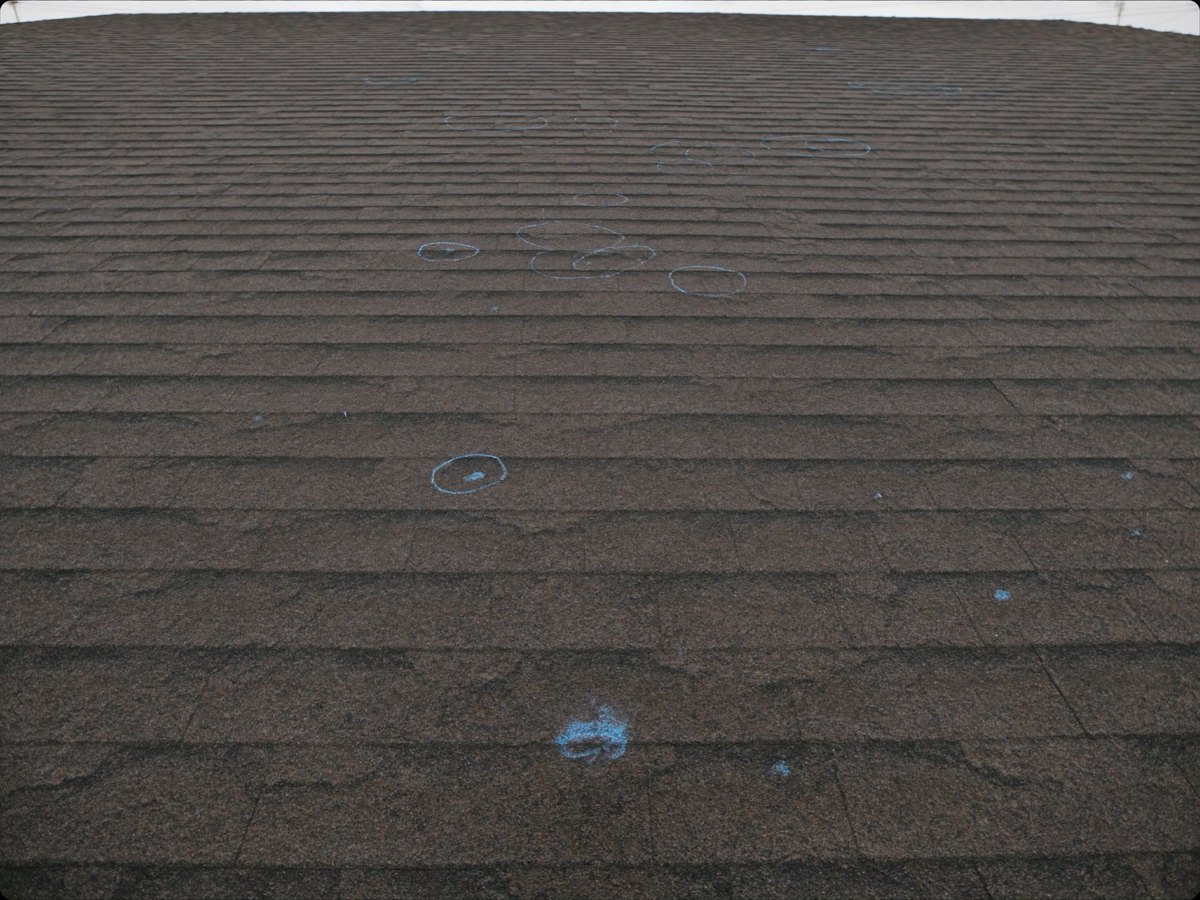
- Close-ups of bruised, cracked or missing shingles
- Damaged flashing, ridge caps, gutters and window screens
- Interior stains, if water has already found the attic
Do not start a DIY tear-off. Clear loose debris that threatens people or cars, then stop, because changing the scene before the adjuster sees it creates arguments you do not need.
When should you call your carrier and get a local inspection?
File the claim once you have clear storm damage, ask for a claim number and the adjuster’s expected timing, and write both down. At the same time, get a second look from a licensed local contractor. A roof inspection tells you whether you are looking at an isolated repair or a full storm replacement before you sit down with the adjuster, and the photos from that visit become part of your file.
What do adjusters usually check?
Expect the adjuster to walk the roof, or fly a drone over a steep pitch, and score:
- Hail hits that fracture the mat or knock granules loose
- Wind creases and lifted tabs
- Decking that feels soft underfoot
- Flashing failures at chimneys, walls and valleys
Bring your photo set and ask for the written scope. If the carrier offers a repair while your contractor is finding bruising across three slopes, ask how that scope was calculated. A calm, documented conversation gets further than a heated one, and it always has.
How do depreciation, ACV and RCV work?
Many policies pay Actual Cash Value first, which is replacement cost minus depreciation, and then release the rest once the work is finished. That holdback is why homeowners feel blindsided by the first check. Ask your agent three questions:
- Is my roof settled at ACV or RCV?
- What proof do you need after installation to release the recoverable depreciation?
- Does my deductible apply once, or per event?
None of that replaces reading the policy, but it does keep you from signing a contract you cannot fund.
When does insurance pay for replacement instead of repair?
Carriers usually approve a full replacement when the damage is widespread enough that patching would leave a mismatched, leak-prone roof. Partial repair is more common when the damage sits on one plane or a few dozen shingles. A contractor’s job is to measure and explain, not to talk you into a claim you do not have. If a replacement is approved, the asphalt roofing systems page explains what a complete replacement scope should include.
When you compare storm replacement quotes, make sure every bid lists the same scope: tear-off or overlay, underlayment type, ice-and-water shield at the eaves and valleys, ventilation and flashing replacement. Matching scopes keep the insurance conversation honest, while mismatched ones are how a cheap bid turns into a supplement fight in week three.
How do Indiana hail and wind seasons affect your claim?
Northeast Indiana regularly sees damaging hail and straight-line winds, usually from late spring through early fall. If your street just took a hit, you are not the only house on the block filing, and you do not need to sign with the first door-knocker offering a free roof. Taking a few days to verify a contractor is the slower path, and usually the safer one.
How should you work with a contractor during the claim?
Pick a contractor who will measure, photograph and explain, rather than one who wants a blank assignment of benefits signed on your porch. Ask whether they have finished insurance jobs in Allen County, and confirm the license and the insurance certificate yourself.
A good contractor hands you a written scope that mirrors what the adjuster can verify: squares of shingles, linear feet of ridge, flashing details, underlayment and a decking allowance. Vague scopes create supplement fights later, and clear ones close claims faster. Our guide to free vs. paid inspection reports explains what each one documents.
If the carrier and the contractor disagree, stay polite and ask both sides to put it in writing, since dated photos beat opinions. You are also allowed to get a second local opinion before you authorize a tear-off, and a contractor who resents that is telling you something.
What about temporary dry-in while the claim moves?
If the roof is open to weather, ask about temporary protection: tarps installed properly, not plastic sheeting held down with bricks. Dry-in protects the deck and the rooms underneath until materials arrive. It is not a repair and should not be billed as one, so keep receipts and photos of the temporary work for the claim file.
Northeast Indiana storms stack up. If a second cell rolls through before your materials land, document the new damage separately and ask your carrier how they want it handled.
What if you are stuck between a repair estimate and a denial?
Get a clear inspection report, then put your questions to the adjuster in writing. If hail is what started this, our hail damage roof repair checklist walks through what to look for, and if a targeted fix is all the roof needs, the roofing repair page explains how those jobs are scoped.
FAQ
Does homeowners insurance always cover hail damage?
Only when the damage is sudden and accidental under your policy, and only above your deductible. Age, wear and deferred maintenance are usually excluded, so read the exclusions before you assume either way.
Should I let a contractor meet the adjuster with me?
Plenty of homeowners find it helpful. Ask your carrier whether they allow it, and pick a contractor who will measure rather than argue.
What if my claim is denied?
Ask for the denial in writing, read the policy language it cites, and consider a second inspection. Escalation options vary by carrier and by state.
How fast should I act after a storm?
Document quickly, keep the house dry with temporary measures if you need to, and follow the claim deadlines written in your policy.